

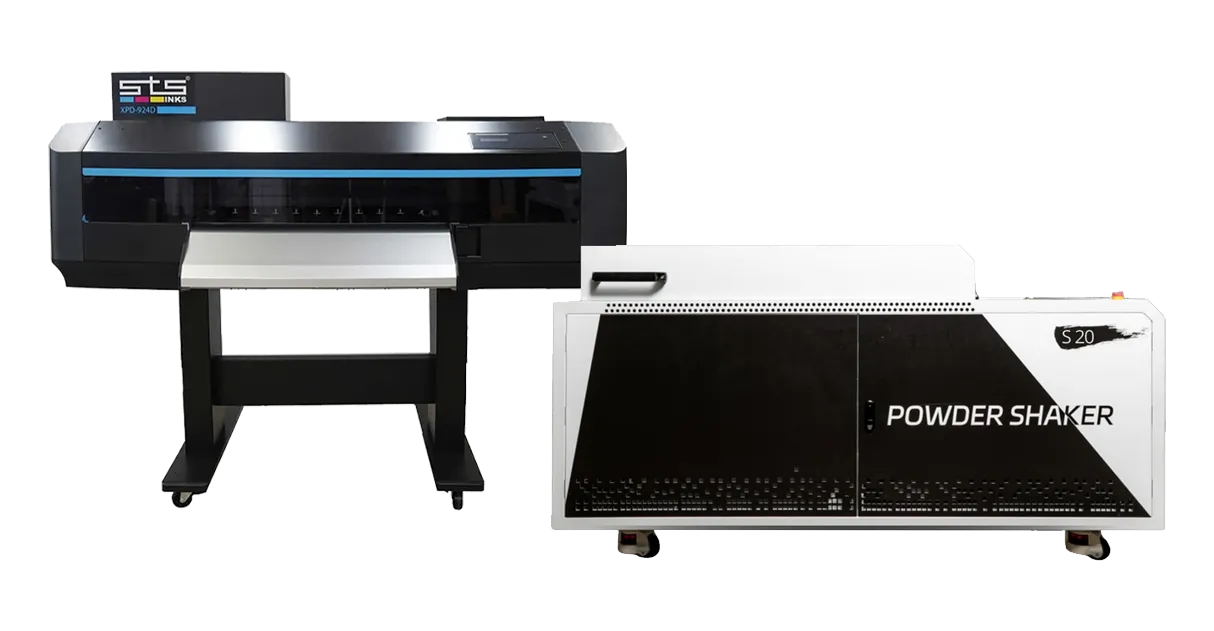
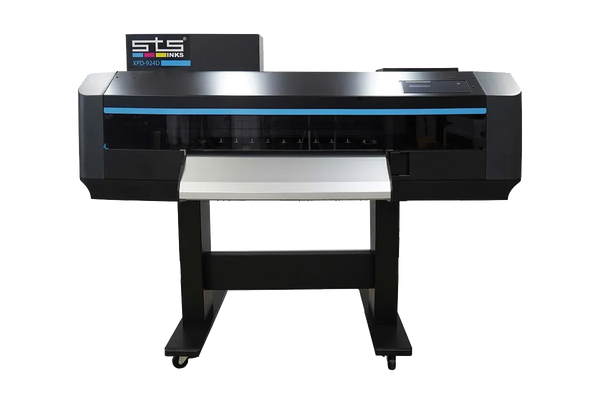
Mutoh STS XPD-924D Direct to Film (DTF)
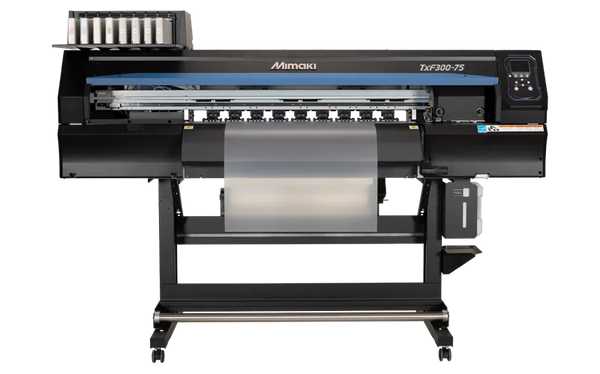
Mimaki TxF300-75 Direct to Film (DTF)
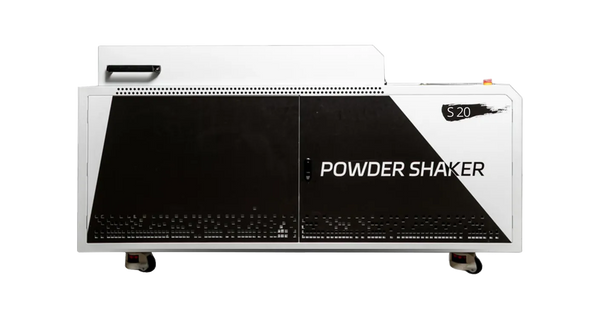
STS DTF S-20 Powder Shaker
Understanding Commercial DTF Printing
Direct to Film printing produces a transfer that can be applied to a wide range of garments without changing inks or setups. The image is printed onto film, bonded with adhesive powder, and transferred using heat and pressure.
In production environments, a DTF printer helps standardise garment workflows. The same setup can support uniforms, promotional clothing, and short-run apparel without switching processes. It is commonly used alongside consumables such as B-Flex DTF transfer film and B-Flex hot melt powder to achieve consistent transfers across different garment types.
Key Considerations When Choosing DTF Printing Equipment
Choosing suitable DTF printing equipment involves more than print quality alone. The system should match the expected production volume and operating workflow.
- Print consistency and colour accuracy: Stable white ink coverage and reliable colour output are important for repeat branding and multi-garment orders.
- Throughput and production speed: Printer output should align with curing and heat press capacity to prevent delays in daily production.
- Film handling and media width: Support for common transfer film sizes helps reduce waste and maintain efficient changeovers.
- Workflow integration: Compatibility with design software, RIP systems, and existing heat press equipment keeps production predictable.
Matching the equipment to workload helps maintain efficiency and reduces rework.
Commercial Garment Applications
A DTF printer supports several practical apparel applications without changing decoration methods.
- Branded workwear and uniforms requiring colour consistency
- Promotional garments and short-run event clothing
- Sportswear and team apparel across mixed fabrics
- Merchandise production and contract decoration
Transfers can be printed ahead of time and applied when required, helping businesses manage production schedules and reduce downtime.
Trade Support And Industry Experience
Pozitive supports Australian sign, print, and garment decoration businesses with garment printing solutions suited to commercial production. Our equipment range is chosen to integrate with established workflows and broader print operations.
DTF systems are often used alongside digital print media for signage work and dye sublimation printers for polyester garment production. Our team provides practical guidance to help businesses introduce or scale DTF printing with confidence.
FAQs
How does a DTF printer compare with DTG and traditional transfers?
DTF transfers apply to more fabric types than DTG and generally require less garment preparation. They also allow finer detail than many traditional transfer methods.
What garments are suitable for DTF printing?
DTF works on cotton, polyester, blends, and many performance fabrics that can be difficult to decorate using direct printing.
Can DTF equipment fit into an existing workflow?
Yes. Most systems integrate with standard design software, RIP workflows, and existing heat press setups.
What maintenance is required in commercial use?
Routine printhead cleaning, ink circulation checks, and controlled operating conditions help maintain reliable performance.
How durable are DTF transfers after washing?
When applied correctly, transfers remain flexible and hold up well through repeated commercial washing.
The Pozitive Advantage
|
30+ Years of Expertise |
Unrivalled Selection |
Tailored Solutions |
Competitive Pricing & Fast Delivery |
Pozitive supports professional garment decorators with DTF systems selected for dependable production use.
- Industry-focused expertise: Guidance suited to Australian sign, print, and apparel workflows.
- Equipment for commercial operation: Systems chosen for consistent output and repeatable production.
- Reliable supply and support: Ongoing assistance and dependable product availability for growing businesses.
Browse Our Selection And Contact Us Today
Pozitive’s DTF printer range supports scalable garment decoration across professional production environments. Explore our range online or contact the Pozitive team for practical advice on selecting DTF printing equipment suited to your workflow.